

AI Made Simple — June 15, 2026
Your weekly cheat sheet for what's happening in AI — no jargon, just what matters for your business.

This Week’s Playbook: 3 Things You Can Do Right Now
Save your seat for Thursday’s live session. I’m going live June 18 on how AI adoption actually works inside a company — the operational version, not the demo (full details in the big story below). It’s free, 60 minutes, and every attendee gets my AI Blueprint framework. Register here →
Make Gemini actually understand your business. Google just let you connect your Google Business Profile to Gemini. It pulls in your hours, services, and customer info so its answers stop being generic. Connect it, then ask it to draft a reply to a recent customer review. Takes 5 minutes.
Use AI to translate a live call. Google’s new Live Translate does real-time speech-to-speech in 70+ languages, rolling into Google Translate and Meet. If you have a supplier or client who speaks another language, this is your next sales call unlocked.
The Big Story: Why Most Companies Get AI Adoption Backward
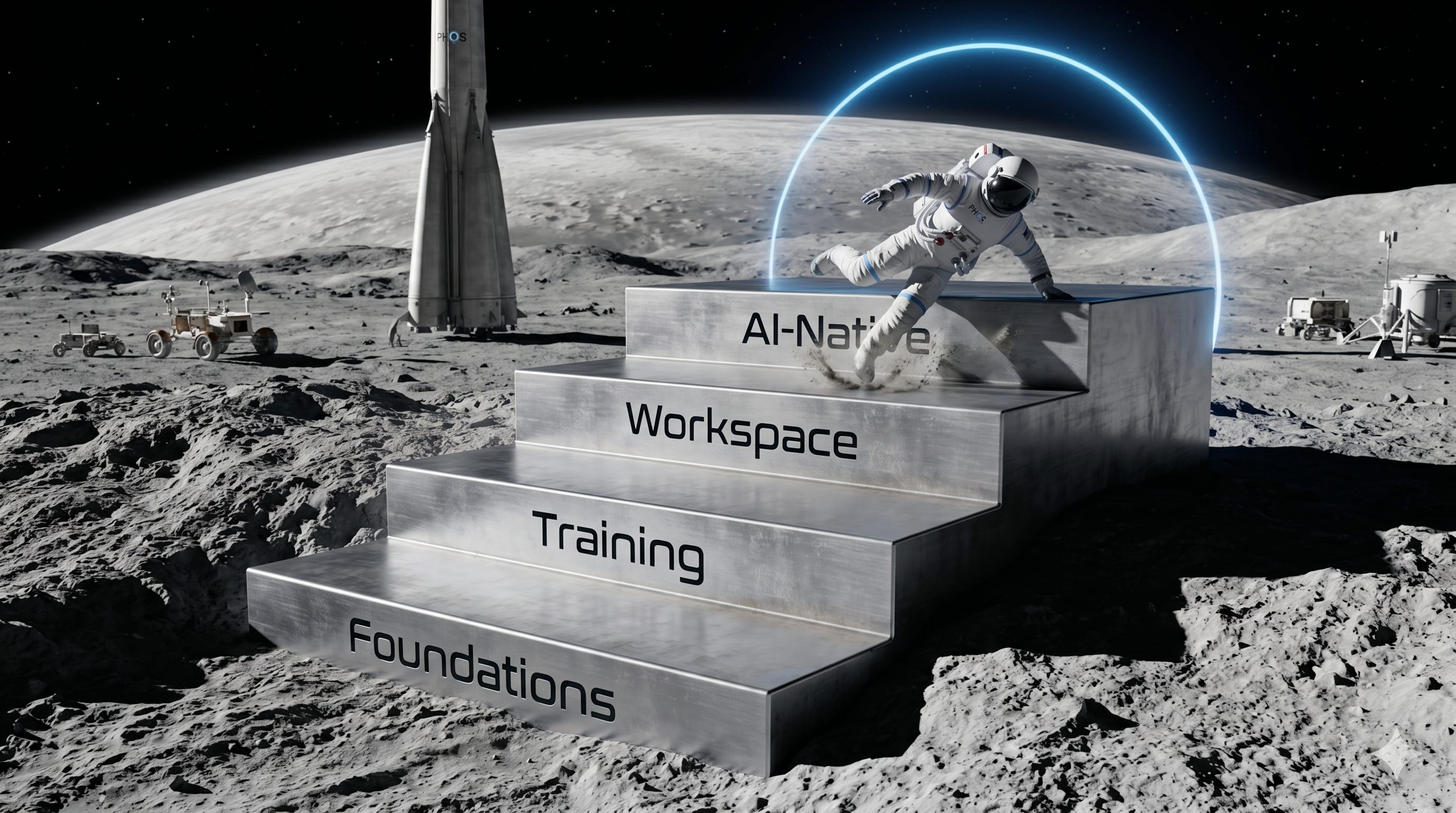
This Thursday, June 18, I’m hosting a free 60-minute live session: “Strategy before the stack: the four phases of AI adoption.” It’s for the business owner who already uses AI every day and keeps hitting the same wall — I know this works for me, so how do I make it work for everyone on my team?
That’s not a tooling question. It’s a strategy question, and most companies answer it backward: they buy the stack before they understand the operation. We’ll walk the order that actually holds:
(1) AI Foundations (mapping your operation before you touch a tool),
(2) Training (making your team fluent in the workflows they already run),
(3) a Private AI Workspace (a company-wide AI loaded with what makes your business specific), and
(4) AI-Native Operations (what the P&L looks like when AI is how the business runs).
I’m bringing in Jordan Katon and West Cruz from Rising Ground - they run ops for a nearly 200-year-old nonprofit serving 25,000+ families across NYC, building AI governance into an 1,800-person operation in real time. It won’t be theory.
Why you should care: The companies stalling on AI six months in didn’t pick the wrong tool - they skipped the foundation. Getting the order right is the difference between AI that pays off and AI that quietly collects dust.
Register here. It’s free, it’s 60 minutes, and every attendee gets The AI Blueprint - the exact framework I use to map a business before recommending a single tool, yours to keep and run yourself.
One News Story That Actually Matters
Apple’s New Siri Runs on Google’s AI
At its big developer event this week, Apple unveiled a rebuilt Siri - more conversational, able to “see” what’s on your screen, living in its own standalone app. The twist: it’s powered by Google’s Gemini under the hood. Apple spent two years trying to build its own AI, couldn’t get it good enough, and quietly rented Google’s instead.
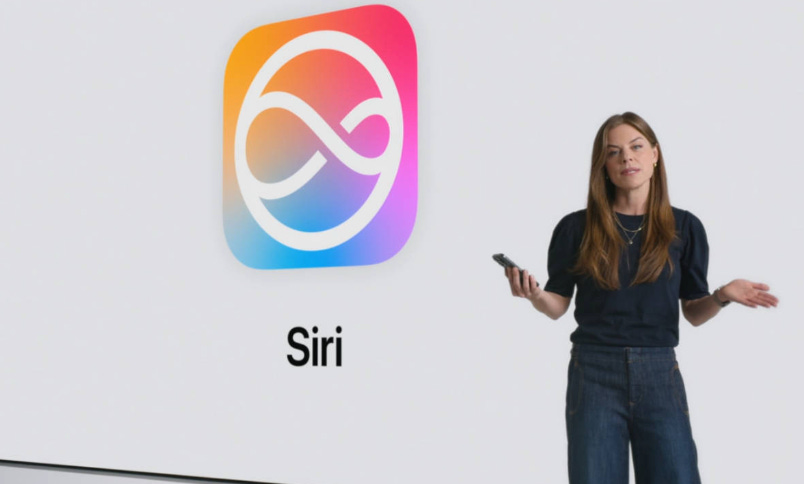
Here’s my take: this is signal, not noise.
When the most design-obsessed company on earth decides it’s better to partner than build its own AI, that’s permission for the rest of us. You don’t need to build anything — you need to pick the right tool and wire it into how you already work. (That’s literally phase one of Thursday’s session.)
If Apple isn’t too proud to use someone else’s AI, neither should you be. The winners aren’t building AI — they’re plugging it in.
The AI Office — Tools You Can Use This Week
Greenhouse AI hiring tools — If you’re hiring, Greenhouse just shipped AI for role setup, interview note-taking, and candidate insights. Try this: use the AI note-taker on your next interview so you can actually look the candidate in the eye instead of scribbling.
Mina — An AI meeting assistant that joins your video calls, takes notes, and turns the conversation into action items automatically. Try this: add it to your next client call and let it write the recap and to-dos while you stay present in the conversation.
Slashy — An inbox-triage and scheduling assistant that sorts your email, drafts replies, and books meetings from plain-English requests. Try this: point it at your inbox for one morning and see how much of the “sorting and scheduling” busywork it clears before lunch.
The “So What” for Business Owners
The shift this week: AI is moving onto your own devices — and that changes everything about cost, privacy, and control.
Google just released Gemma 4, its most powerful “local” AI model yet — and “local” is the word that matters. It runs directly on a normal laptop or phone, with no internet connection, no API keys, and no cloud bills. Until now, AI this capable only lived in the cloud, which meant your data left your building and the meter was always running.
This is a genuine game-changer for where business AI is headed. Running AI locally means your sensitive data — client records, financials, contracts — never leaves your device, the cost drops toward zero, and nobody can pull the model out from under you or change the price overnight. The future isn’t “all cloud” — it’s hybrid: heavy lifting in the cloud, sensitive and everyday work running privately on your own hardware.
What to do: You don’t need to act today, but put “private, on-device AI” on your radar — it’s about to become a real option for anything you’re nervous about sending to a cloud tool. If you handle sensitive customer data and want to map what should live in the cloud vs. on your own machines, that’s exactly what we do at LowCode Agency — reply and I’ll help you think it through.
Quick Hits
The most powerful AI ever built lasted 72 hours — Anthropic’s new Claude Fable 5 launched June 9, then a U.S. export-control order forced it offline by June 12. Proof that a cloud model your business depends on can vanish overnight — and a nice argument for the local-AI shift above.

ChatGPT’s model picker got simpler — thinking levels are now just Instant, Medium, High, Extra High, and Pro. Less guessing about which option to click.
AI ROI is the new boardroom conversation — the hype phase is ending and “what did this actually save us?” is the question everyone’s now asking. Good time to track your own numbers before someone asks you.

What I’m Building This Week
I’m prepping Thursday’s webinar — turning the four-phase adoption framework we run with clients into something any business owner can follow on their own, plus finalizing The AI Blueprint template every attendee walks away with. If you’ve ever felt like AI is working for you but not your team, this is the one to catch. Save your seat.
That’s your week in AI. Forward this to someone who keeps asking “should I be using AI?” — the answer is yes, and this newsletter is their starting point.